

Right in the city heart of Brisbane, Australia you will find a quaint tea shop with an assortment of teas for all taste buds. This sibling-run eco-friendly store is built on dreams and each cuppa, every blend reveals how much quality and hard work they dedicate to what they love.
Website: https://www.tourdetea.com.au/
Location(s) Headquarters: New Farm, Brisbane, Australia.
Company Focus:
- ‘Distinguished blends that transcend time and place.’
Most popular company tea(s)?
Does the company name have a meaning?
- After exhausting every pun and wordplay available – we landed with Tour de Tea – as we wanted to have a business name which reminded people of the global connection tea offers. Tea (camellia sinensis) along with herbals teas, connect us to every corner of the globe. It’s also why each tea we sell comes with its own short story. These stories function to evoke the perfect atmosphere we believe is distilled in the blend, and to set the scene and remind us of the culture and place where the tea is sourced (eg: Buttercorn Pu-erh ) or in the case of flavoured tea, the influences of the profile (Les Jardins). Tea is connection – to both one another intimately, as well as to the communities and origins of tea. Our name serves to remind everyone of the cosmopolitan nature of the industry.
Do you participate in any charities?
- The business gives when it can to the Asylum Seeker Resource Centre – which is an organisation which assists in supporting refugees trying to settle in Australia. Outside of that – Tour de Tea is run as a Social Enterprise model, meaning essentially all profits are reinvested back into the business. As Tour de Tea is operating as waste-free, sourcing from local farmers, small, local makers, and using plant-based alternatives to plastic – this reinvestment means we can embolden and support sustainable industries as we grow.
- Additionally, our Paint and Sip Workshop runs with the purpose of funding itself as a free community service into vulnerable communities https://www.tourdetea.com.au/paint-and-sip-the-art-of-teatotalling
What is your and/or your co-workers’ favorite tea?
- Amy: Blue Mountain – summers fruits, vanilla, on a rich blend of Ceylon and Chinese black teas. Gyokuro – a high grade shaded tea from Japan. Sometimes intensely umami with almost a butterscotch sweetness. We have a few in the pipeline from my recent trip to Japan.
- Hannah: Boulangerie – a custom blend only found at Tour de Tea – it tastes like the speculoos biscuits and burned butter on a silky black tea. Ti Kuan Yin – a traditional Chinese oolong. Depending on the altitude it has a varied profile – but ours tastes like fresh rain – it is pristine and makes my knees a little weak
What are your thoughts on transparency in the tea industry?
- I think transparency is lacking on the retail side. I think many western tea companies run by white people are justifiably coy about the deep colonial roots and disadvantages within the tea industry. But this doesn’t mean we shouldn’t talk about it. When it comes to the sustainability and ethics of the tea – we only work with suppliers who assure us of practices and processes rooted in social, industrial and environmental responsibility. This is an area of enormous importance to us, and something we continually assess as our business grows. However as I’m sure you know, the world of tea and the developing economies it supports, make it a complicated space. I’ve a background in political science and industrial relations, so it’s an area I’m keenly paying attention to in my travels, research, and sourcing at all times. We only officially offer our customers assurances on our own practices and protocols, as we can speak to them with 100% certainty and honesty. Despite all the regulations / industrial awards or association memberships, it is very difficult to guarantee that ideologies are being executed at a factory floor or field level, on the other side of the planet.
- In my trip to Sri Lanka, I spoke to many women working in the tea industry (it’s mostly women who do the physical labour), and families who have worked in the industry for generations. It confirmed what we’d often imagined – that our ease in sighting in simple certification logos on packets which assure consumers of ethical purchasing, is indeed a leap of faith. We are somewhat uncomfortable seeing other small companies publicly market their tea as unquestionably ethical because we just don’t feel that’s realistically honest unless you’re there daily at a ground floor level to witness what is happening in these predominantly developing nations. We have worker’s rights abuses and industrial cruelties happening everyday in Australia – most people are unaware of the prevalence of this and they remain mostly unchallenged. If we can’t guarantee it in our own country – it seems ignorantly optimistic to guarantee it in a different country where the industry and people are under totally different pressures both culturally and economically. No matter how ideological a company’s vision statements might be, we’ve come to place a far greater importance in building trusting relationships with like minded suppliers, rather than unquestionably accepting familiar westernised accreditations only. Further to this, the requirements to meet these standards simply often go unmet by small tea gardens, as no matter how lovely their conditions may be, they simply do not have the resources to apply and move through the bureaucratic hoops in order to acquire the official qualifications. Same can often go for organic statuses; many of our teas we know meet the standards of organic and pesticide free, but the small plantations we order from simply do not have the resources required to apply for accreditations. And so, we discuss this with our customers. We never offer 100% assurance or comfort, because no one can if we’re being truthful, and if we were 100% comfortable we wouldn’t be driven to constantly assess the situation and scrutinise our sources.
- We actively encourage our customers to think for themselves – https://www.tourdetea.com.au/journal/tea-and-impact
What role does tea play in our lives?
- For many, so much. It is the ritual that accompanies it which seems to create so much reverence from tea-lovers. We use tea as a way of connecting, sharing, expressing and reflecting. The leaf itself is nothing short of acutely magic, with infinite permutations all designed by merely nature and the elements. There is something truly mesmerising in a peaceful cup of tea – the tricky thing is getting people to slow down and appreciate that in such a pressurised and busy society.
Social Media:
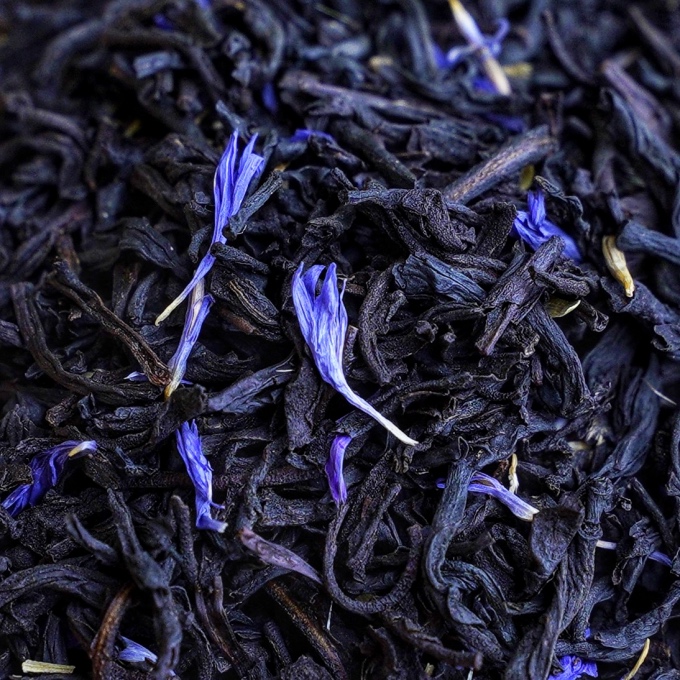
TeaTiff Picks: Blue Mountain. Thoughts of Australia can conjure many different and diverse images. When I think of tea in AU, black tea is the first thing that comes to mind. This is perfect for those nice hot days, the cooling blue cornflowers, and the earthy aroma as an iced tea or brewed hot on those slightly chilly days.
 TeaTiff
Leave a comment