
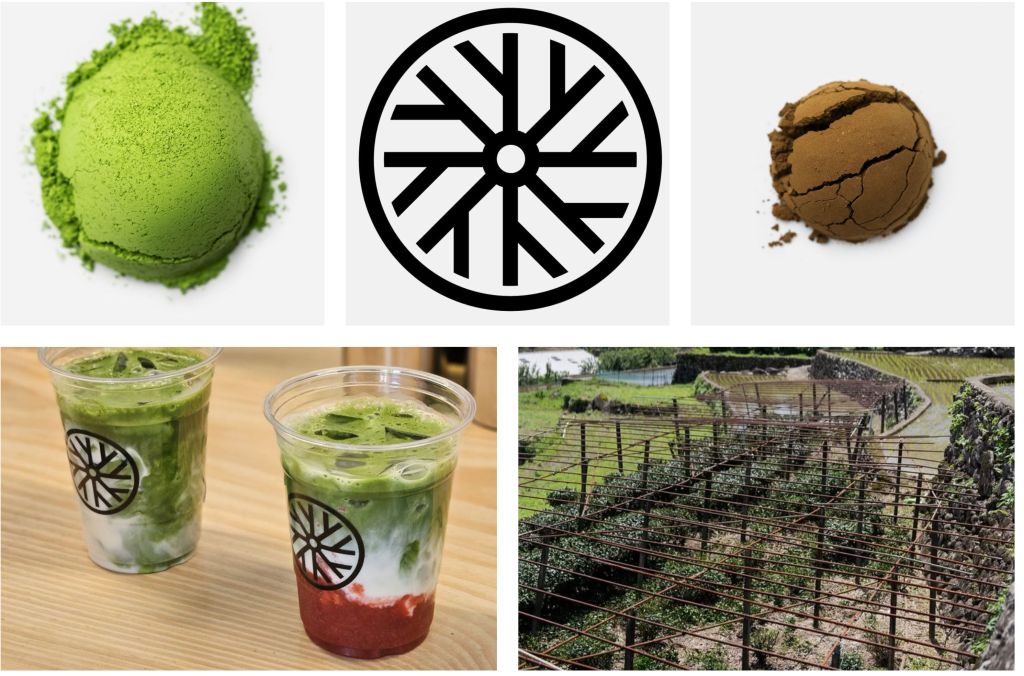
Thanks to the Global Japanese Tea Association, I’ve had the privilege of connecting with numerous remarkable individuals. One standout is Marc, the owner of Ooika. His dedication to providing exceptional matcha starts long before it reaches his establishment, extending all the way to Japan where he sources traditional matcha. He possesses a wealth of knowledge and carries himself with great humility.
Website: https://ooika.co/
Location(s) Headquarters:
- 2661 Main Street, Lawrenceville and Princeville, NJ 08648
Company Focus:
- Preserving heritage matcha. Specifically certain cultivars, hand picked matcha, traditional growing, shading, and harvesting, and the use of Ishi-Usu (石臼) stone mills.
- We take three approaches in our operation:
- 1st Provide that matcha to Americans in most uncompromised way possible.
- 2nd – For people to appreciate heritage matcha they need to understand it.
- 3rd – Our goal is to preserve Japanese matcha but also present in an American format for Western understanding, for example, lattes, chocolate, etc.
Most popular company tea(s)?
Does the company name have a meaning?
- Ooika is the aroma of dimethyl sulfide. Increased levels of intense shading lead to higher production of dimethyl sulfide. This is known as the aroma of shadows.
Do you participate in any charities?
- In our handbook we have what we call Influence over influencers where we give to non profits or charities.
What is your and/or your co-workers’ favorite tea?
- I love what I sell, but with single-origin matcha, the terroir can sometimes be unpredictable. Beyond our own matcha, I also appreciate matcha from Marukyu Koyamaen. Personally, I enjoy Chinese teas as well, especially those from Tea Drunk – like a good Sheng Pu-erh, though lately, I’ve also been enjoying Shou Pu-erh.
What are your thoughts on transparency in the tea industry?
- I have very strong and controversial beliefs on this.
- It is contingent on what the goal is. If the companies goal is blended matcha, transparency isn’t the goal, it’s about the recipe it’s the ingredients. It may detract from the enjoyment.
If the goal of the company is matcha as a fine food this is different.
- This is where I am hesitant to answer because Ooika is new. I am an outsider compared to Japanese producers and many generational farmers are concerned. I hesitate to give strong opinions that establish norms. When we look at the Japanese tea industry and say, “This part is bad” without full knowledge of the whole picture and how it connects to a larger sum, while trying to understand with our western minds we stand the change of disseminating information that is not completely true and lacks full understanding. My views are very strong but may be missing perspective of multi generation farmers.
- I personally believe that other companies are not meeting standards. A mill date is listed on each of our matcha packs. You cannot rate matcha unless you know mill date. Most companies selling matcha in the US sell matcha that is four to five months old, even well established companies. Consumers can’t make informed decisions as to the price and quality of Matcha without a mill date, so I believe manufactures have an ethical responsibility to include it.
- Matcha immediately starts breaking down within hours once it is milled. Overall, volatile compounds lose more when the grind is smaller and the smaller it is the faster it is lost. If we think about espresso, for example, when it comes to freshness. McDonalds, grocery stores, Starbucks, all have machines to make fresh ground espresso. No matter the place because people want their espresso fresh.
Why are we okay with less fresh matcha?
- Milling matcha is hard but I feel that each package should include farmer, cultivar, and mill date. However, some producers might not do it because they dont know, others might not do it because it’s the status quo of Japanese manufactures, and just align with what they do.
- I feel I shouldn’t be the only one doing this. Consumers need to know, understand, and taste the difference.
What role does tea play in our lives?
- It connects us with culture and history that’s true but I hope we don’t forget it’s a food and it tastes good. Let’s not get lost in the romanticism of what tea can be. It is a fine food that has incredibly complexity .

TeaTiff Picks: Okumidori. It’s so hard to choose! They even have a milled hojicha that looks stellar. I will update this after I give them a try.
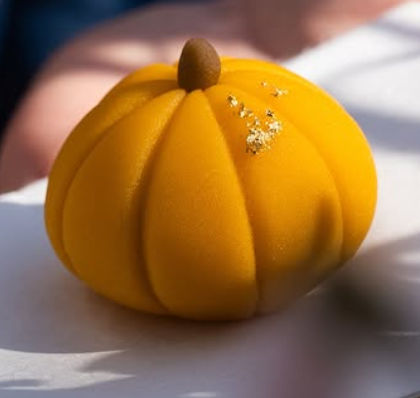
This time, I’m also including a non-tea pick. In the Japanese tea ceremony, a wagashi is always served – its type varies based on the season and the ceremony’s motif. These confections are crafted by skilled artisans, making wagashi a true art form. If another one of these classes is offered, I highly recommend attending. https://ooika.co/shop/p/wagashi-marumame
Sip some tea & leave a comment
Ordering? Be sure to tell them TeaTiff sent you!
If you already love them, tell us what you love below!
 TeaTiff
Leave a comment